

December 19, 2025
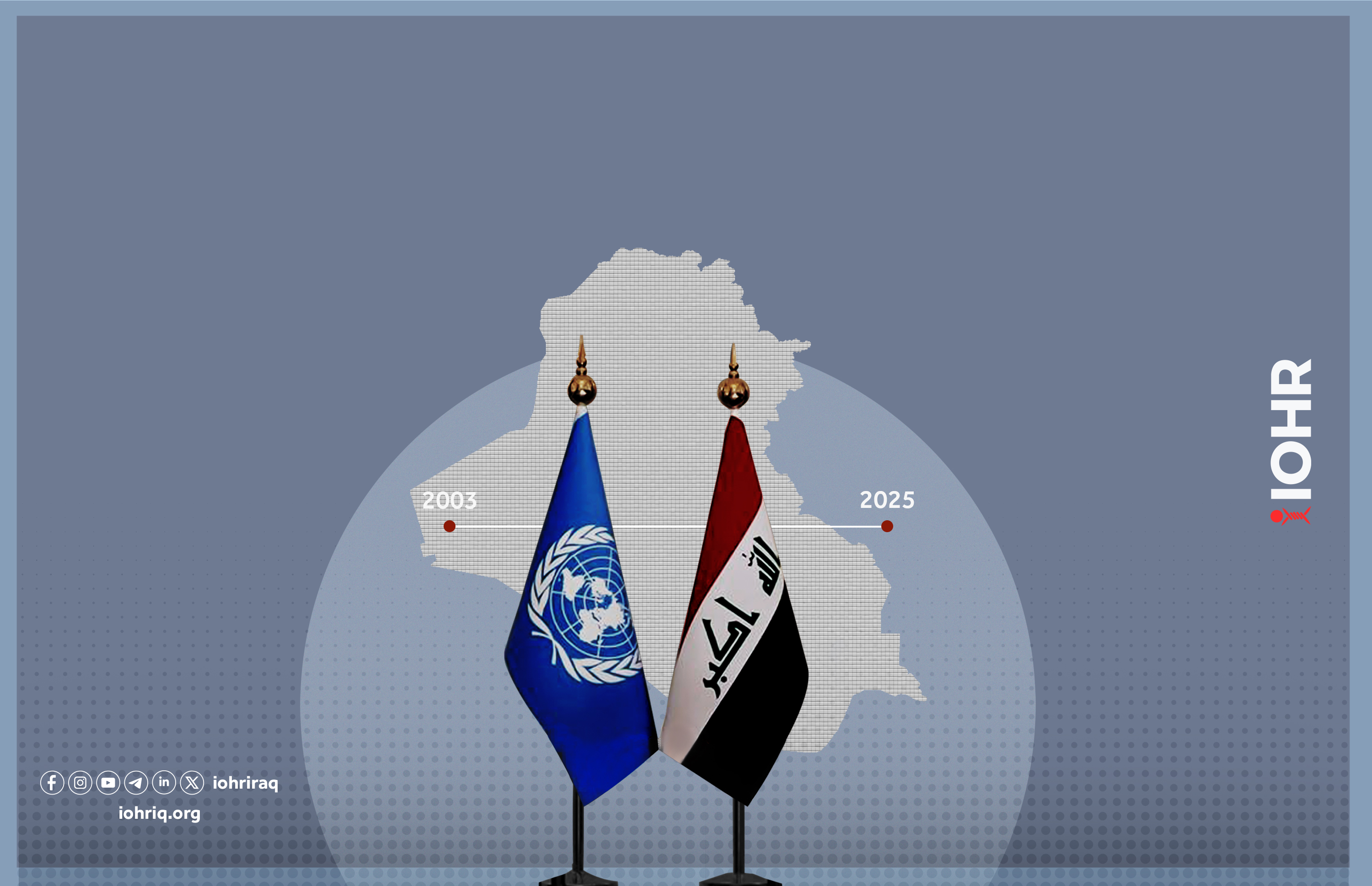
The Position Paper issued by the Iraqi Observatory for Human Rights (IOHR) examines the implications of the end of the mandate of the United Nations Assistance Mission for Iraq (UNAMI), and the significance of this development as a major shift in Iraq’s political and human rights landscape after more than two decades of sustained UN presence.
The paper analyzes the role UNAMI played in political support, human rights monitoring, and the facilitation of elections and political dialogue, while also addressing the structural and political constraints that limited its effectiveness, as well as the controversies surrounding the performance of some UN envoys—particularly during critical moments such as the 2019 protest movement.
It further discusses the potential consequences of UNAMI’s departure, including the reduction of direct international oversight and the heightened risk of impunity, alongside the transfer of primary responsibility to Iraqi state institutions and civil society actors.
The paper outlines three possible post-UNAMI trajectories: a conditional reform path, institutional stagnation, or a serious regression in human rights protections.
IOHR stresses that the greatest risk arising from the end of UNAMI is not the oversight gap itself, but the normalization of violations by framing them as purely internal affairs beyond scrutiny.
The paper concludes that the post-UNAMI phase constitutes a critical test of the Iraqi state’s commitment to human rights, the capacity of civil society to assume a stronger monitoring role, and Iraq’s ability to move from crisis management toward a sustainable system grounded in accountability and the rule of law.
To read the full policy brief, click here.