

This report examines the reality of women in Iraq and the escalating challenges facing their participation in the public sphere, including digital defamation campaigns and social and legislative pressures. It monitors the impact of these practices on female journalists, activists, and candidates, while analyzing the chasm between the legal framework and the actual protection of women's rights.
March 8, 2026
On the occasion of International Women's Day, the Iraqi Observatory for Human Rights (IOHR) states that Iraq is witnessing its most dangerous regression in basic rights and freedoms in decades. A systematic campaign, orchestrated by political actors and armed groups, aims to "liquidate" active female presence from the public domain.
The IOHR further asserts that current events are not merely isolated violations, but rather a full-fledged "Strategy of Displacement" that utilizes digital incitement as a precursor to physical assassination or forced social exclusion.
Historical Shifts and the Erosion of Presence
The status of women in Iraq has undergone profound shifts over recent decades, tied to the country's political, social, and economic transformations. Although Iraqi women have historically been present in education, labor, and public life, recent years have revealed increasing challenges to their ability to sustain this presence, particularly in the public sphere encompassing political work, media, and civil activism.
While the Iraqi Constitution stipulates the principle of equality and guarantees political representation for women through a quota system, the social and political reality reveals a clear gap between the legal framework and actual practice.
Prior to 2003, despite general political restrictions, Iraqi women achieved a notable presence in education and civil service. Women's education rates rose significantly starting in the 1970s, and they participated in sectors such as education, medicine, and public administration. Major Iraqi cities saw a clear female presence in universities and government institutions, alongside the emergence of social and cultural organizations that bolstered women's roles.
However, the series of wars starting with the Iran-Iraq War in the 1980s, followed by the Gulf War and the 1990s economic sanctions, left deep scars on the structure of Iraqi society. These conditions led to a decline in basic services and rising poverty, causing social changes that reproduced traditional roles for women. As economic conditions worsened, many families adopted more conservative social strategies to maintain stability, which gradually affected women's presence in public life.
Post-2003, Iraq entered a new political phase characterized by greater pluralism. Gender equality was included in the Constitution, and a quota system was adopted, guaranteeing women at least 25% of parliamentary seats. While this increased the number of women in legislative institutions, this representation has not always translated into actual influence in decision-making. Many women who reached Parliament or local councils faced challenges related to the nature of the party system dominating political life, where key decision-making positions within parties remain largely restricted to male leadership.
The Mechanics of Exclusion: Digital Defamation and Social Pressure
In recent years, a more complex phenomenon has emerged involving attempts to shrink women's presence in the public sphere. These attempts often do not manifest through official laws or direct government decrees, but are embodied in social, cultural, and media practices that seek to create an uncomfortable or unsafe environment for women participating in public work.
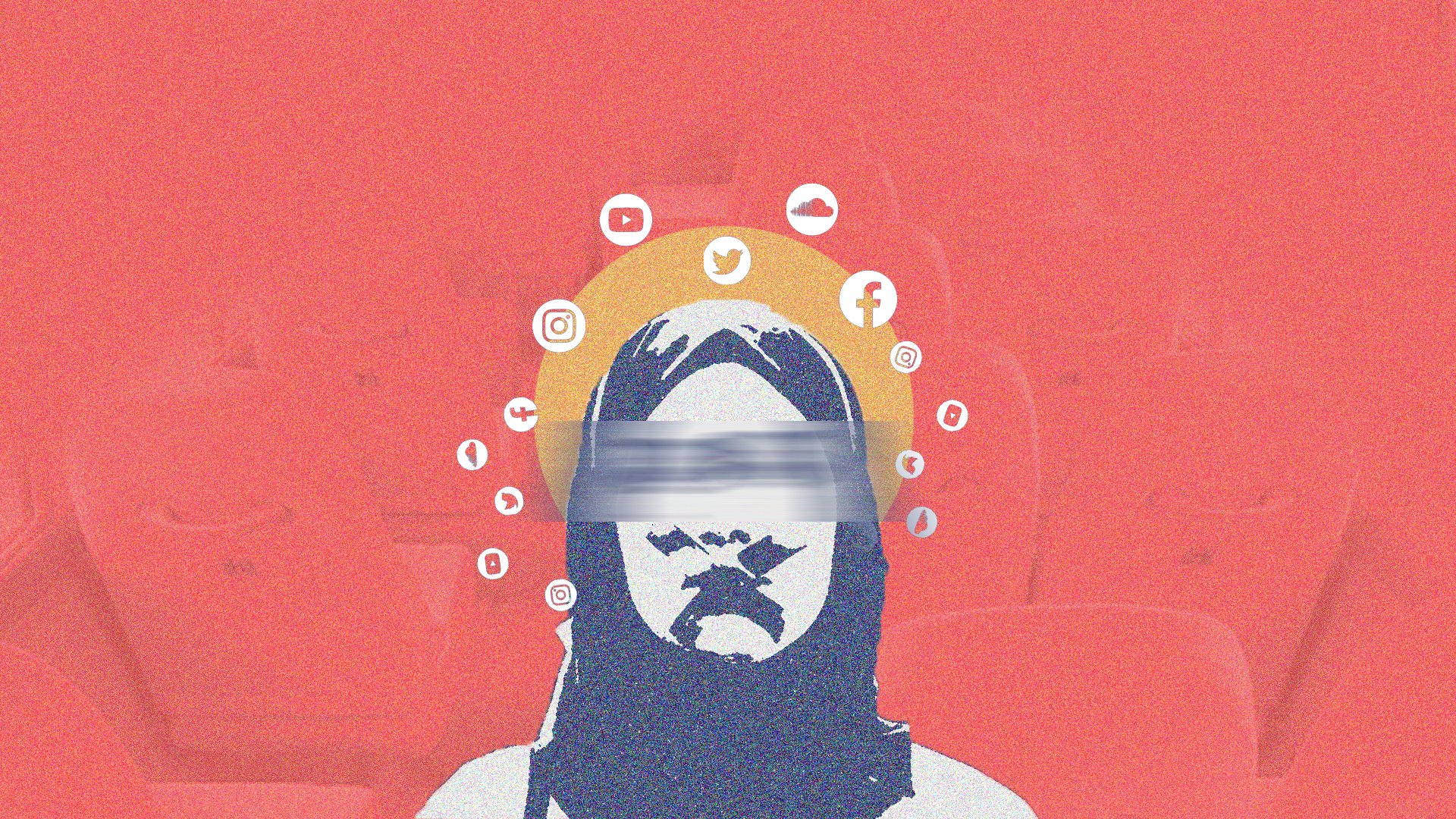
This is clearly evident in campaigns targeting female activists, journalists, or electoral candidates. Many of these women face defamation campaigns on social media that involve questioning their personal reputations or spreading rumors about their private lives.
These campaigns are among the most influential tools in attempting to drive women to withdraw from public life because they rely on a social system that considers a woman's personal reputation a sensitive element in evaluating her social role. When a woman working in the public sphere is targeted by defamation or abuse, the impact is not limited to her alone; it often extends to her family and social environment, creating compounded pressure that may force some women to reduce their media appearance or withdraw from public activity altogether.
Alongside defamation campaigns, conservative social discourse plays a significant role in reducing women's public presence. In some contexts, a woman's political or media work is portrayed as conflicting with the traditional roles she is expected to perform within the family. Concepts of honor and reputation are often used to restrict women's movement or to question the motives for their participation in public life. This type of discourse is not always explicit, but it recurs in public discussions, on social media, and in some religious or political rhetoric, creating a cultural environment that pressures against women's participation in public affairs.
Furthermore, women working in the public sphere face various forms of harassment and threats. In some cases, activists or journalists receive threat messages or online harassment, which can sometimes escalate to cyber-blackmail or sexual harassment. Although these practices do not always appear in public, they are a major factor in creating a sense of insecurity among women considering involvement in public work.
The spread of social media has opened a new space for public debate in Iraq, allowing many women to express their opinions. Recent years have seen prominent female voices on digital platforms discussing social, political, and cultural issues. However, this same digital space has also become an arena for sharp conflicts, where some women are subjected to organized bullying or abuse, reflecting the existing tension in society regarding women's roles in the public sphere.
Civil Society vs. Radical Hegemony
In the face of these challenges, civil society organizations play a vital role in supporting women. Many organizations have worked on training programs to empower women politically and socially, documented violations against activists and journalists, and conducted awareness campaigns to promote gender equality.
Conversely, dominant radical forces seek to confine women's roles to narrow traditional frameworks, targeting any female voice with the courage to criticize or participate in decision-making. This is done by creating an "expulsive" environment in journalism, politics, and civil work, where "Character Assassination" is used as a tool to break women's will and tarnish their image before the public. This has led to the withdrawal of many female talents for fear of the fabricated "social stigma" managed by funded electronic armies.
Documented Testimonies and Legislative Threats
The Iraqi Observatory for Human Rights (IOHR) documented the testimony of a field reporter who faced direct threats from a "powerful political party" after revealing sensitive political understandings. She stated: "It wasn't just criticism of my work; it was an attempt to crush me as a human being. After publishing a report on government formation deals, I woke up to threats via WhatsApp. They threatened me with everything, and their documented messages tell me that if I don't stay silent, the price will be my career."
The IOHR states that the current parliamentary term is characterized by a "radical" approach seeking to undermine the civil principles of the Iraqi Constitution. Instead of enacting laws that guarantee freedoms, the previous Parliament focused on legislative projects that entrench ideological hegemony, such as the amendment of the vague "Anti-Prostitution Law" and the amendments to the Personal Status Law.
This legislative trend aims not to organize society, but to provide legal cover for the prosecution of female activists and human rights defenders under elastic charges related to "violating values." Such behaviors turn the legislative institution into a party to the intimidation of women rather than their protection.
The recent elections in Iraq saw the peak of using "reputation as a weapon" to displace female competitors. Amid the power struggle, electronic armies were deployed to systematically target independent or liberal candidates. One candidate recounted her experience to the IOHR: "I entered the last electoral race with full faith in change, but I faced an 'electoral terrorism' I never imagined. Opponents did not attack my political program or competence; they focused entirely on my moral assassination. They maligned me greatly. The goal was to destroy me socially and psychologically before my audience and family to force me to withdraw from the race."
Additionally, civil society workers face constant "accusations of treason." Female activists at the forefront of defending women's rights are subjected to smear campaigns accusing them of "implementing foreign agendas" or "working with embassies." This inflammatory rhetoric is a veiled invitation to physical assault, as happened with activist Yenar Mohammed, whose assassination in March 2026 was preceded by large-scale "demonization" campaigns.
Perspectives from the IOHR
Shams Al-Lachmawi, Assistant President of the IOHR, stated: "Women activists and prominent figures in Iraq are living in a digital and physical minefield. The defamation campaigns on social media against women demanding rights and freedoms, or those criticizing the Personal Status Law amendment, are funded and organized campaigns aimed at intimidating the entire feminist community. The transformation of journalistic and rights-based work into a confrontation with powerful parties that own electronic armies puts women's lives in real danger. We at the Observatory emphasize that protecting them from this 'Intellectual Terrorism' is a legal duty of the security and judicial authorities before incitement turns into new bullets."
Many human rights defenders have found no choice but to leave. The IOHR documented the testimony of a prominent activist forced to leave Iraq for a neighboring country due to incitement: "When the incitement began against me due to my public defense of women's rights and rejection of the Personal Status Law amendments, I didn't expect the digital space to become a prison surrounding my home. The messages started with vile insults and ended with severe character assassination. I felt the ground shaking beneath me, and that the state, which was supposed to protect me, was the one giving the green light to the instigators. I had no choice but to pack my bags and leave Iraq, leaving behind my dreams and field work. Migration for survival is not easy, but staying in Iraq as a prominent human rights figure meant waiting for death or a fabricated scandal at any moment."
The IOHR analyzes the Parliament's insistence on amending Personal Status Law No. 188 of 1959 in 2025 as an attempt to codify the "Oppression of Women." By legitimizing out-of-court marriages and stripping away custody and inheritance rights, women are being stripped of their civil legal protection. Conversely, the Parliament intentionally refuses to enact the "Domestic Violence Protection Law," leaving thousands of women facing murder and assault without legal recourse. The Observatory interprets this as a political desire to keep the family under customary and radical authority, away from state oversight.
Abeer Al-Hadithi, IOHR member and specialist in violence against women, concluded: "The recent exposure of Iraqi women in the digital space reflects a disturbing escalation in defamation and character assassination campaigns. The Observatory has documented organized cases involving fabricated images and tarnishing of reputations, which is a form of digital violence that could escalate into real threats to women's lives. The continuation of these campaigns without legal accountability encourages their repetition. We reaffirm that protecting women from digital violence is an essential part of protecting freedom of expression and human rights in Iraq, and we call for the adoption of clear legal policies to confront this growing phenomenon."