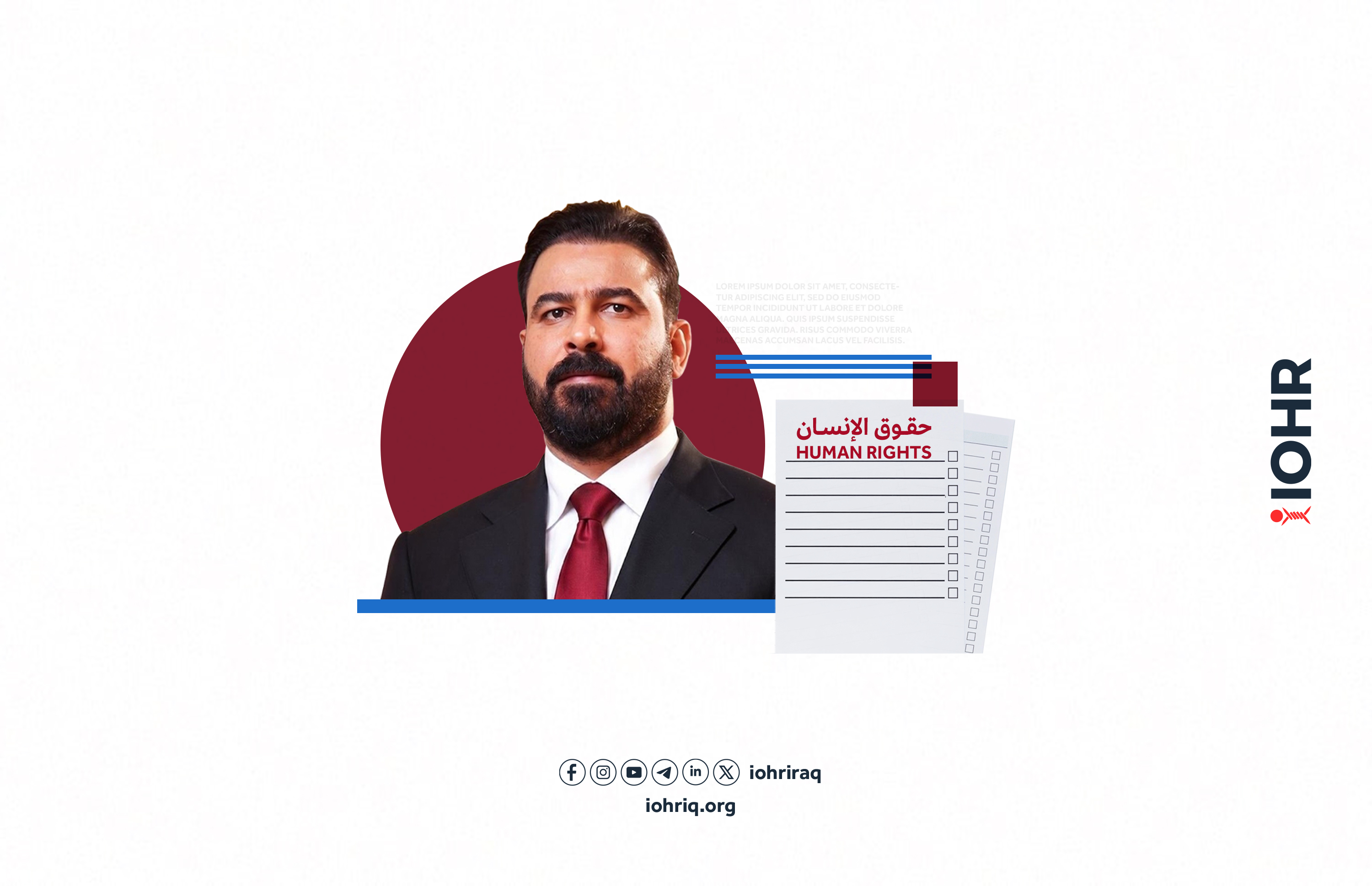

This statement is addressed to the Prime Minister-designate, Ali al-Zubaidi. The IOHR warns against prioritizing political deals over human rights. The ultimate test lies in prosecuting protesters' killers, resolving enforced disappearances, and ending impunity. True legitimacy requires protecting fundamental freedoms, monitoring detention centers, and ensuring justice, rather than relying on hollow promises that further erode public trust.
April 28, 2026
The Iraqi Observatory for Human Rights (IOHR) stated that the designation of Mr. Ali al-Zubaidi to form the new government places him at one of the most sensitive and complex junctures in Iraq’s modern history. This comes amid a backdrop of accumulated political, economic, and security crises, alongside a widening trust deficit between the citizenry and the State.
While political factions typically preoccupy themselves with the distribution of cabinet portfolios and the engineering of political balances, the paramount question for Iraqis remains: Will human rights be a genuine priority for this government, or will they remain mere rhetorical headlines in official statements, absent from practical implementation?
IOHR further emphasized that any governmental program that fails to place the protection of the Iraqi individual, their dignity, and their fundamental freedoms at its core will be inherently incapable of achieving substantive change, regardless of its political or economic pledges. A State that fails to protect its citizens, or shows leniency toward violations committed against them, gradually forfeits its legal legitimacy and public confidence.
IOHR maintained that Mr. Ali al-Zubaidi—as the Prime Minister-designate coming from a human rights background—is today mandated to prove that justice is not merely a political discourse or a personal history to be invoked when convenient. Rather, it must be a State policy and a genuine will capable of confronting the centers of influence (power hubs) that have circumvented the rule of law for years. Iraqis are not merely awaiting a government of new names, but a paradigm shift in State governance and its treatment of the human person.
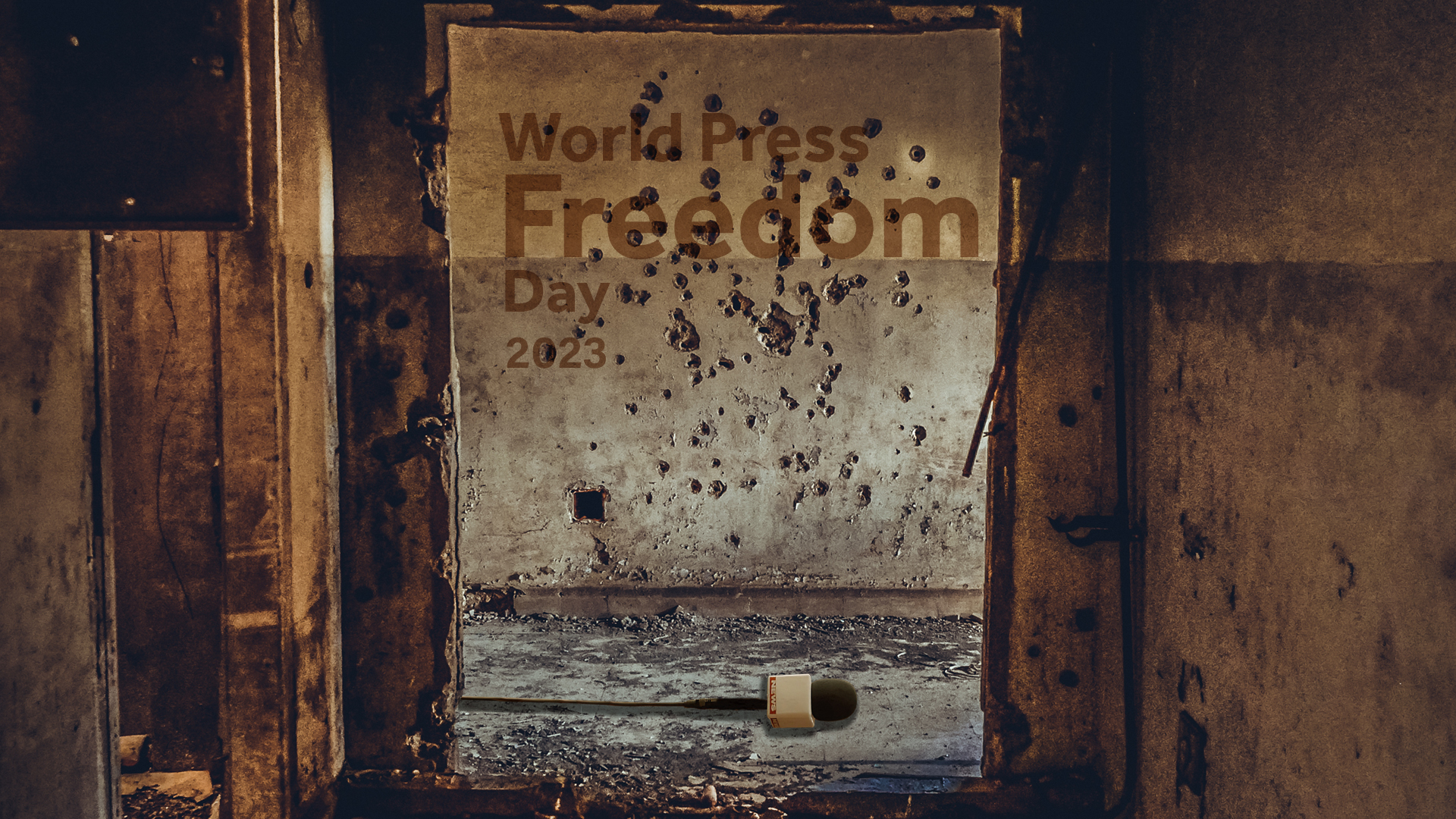
IOHR noted that the first true test for the incoming government begins with the file of those responsible for the killing of protesters, activists, and journalists. Over recent years, this file has become a stark symbol of State impotence in the face of illicit arms and political influence. The persistence of this file without accountability not only signifies the absence of justice but also conveys a dangerous message that the extrajudicial killing of citizens can pass with impunity, and that the State is either unable or unwilling to protect its people.
IOHR pointed out that victims' families no longer accept temporary committees, vague promises, or statements issued under the pressure of public opinion only to be subsequently shelved. What is required today are transparent and publicized measures, starting with the disclosure of genuine investigative findings and holding both the direct perpetrators and their political or security covers accountable, thereby ending the culture of impunity—one of the most critical factors in the erosion of trust in the State.
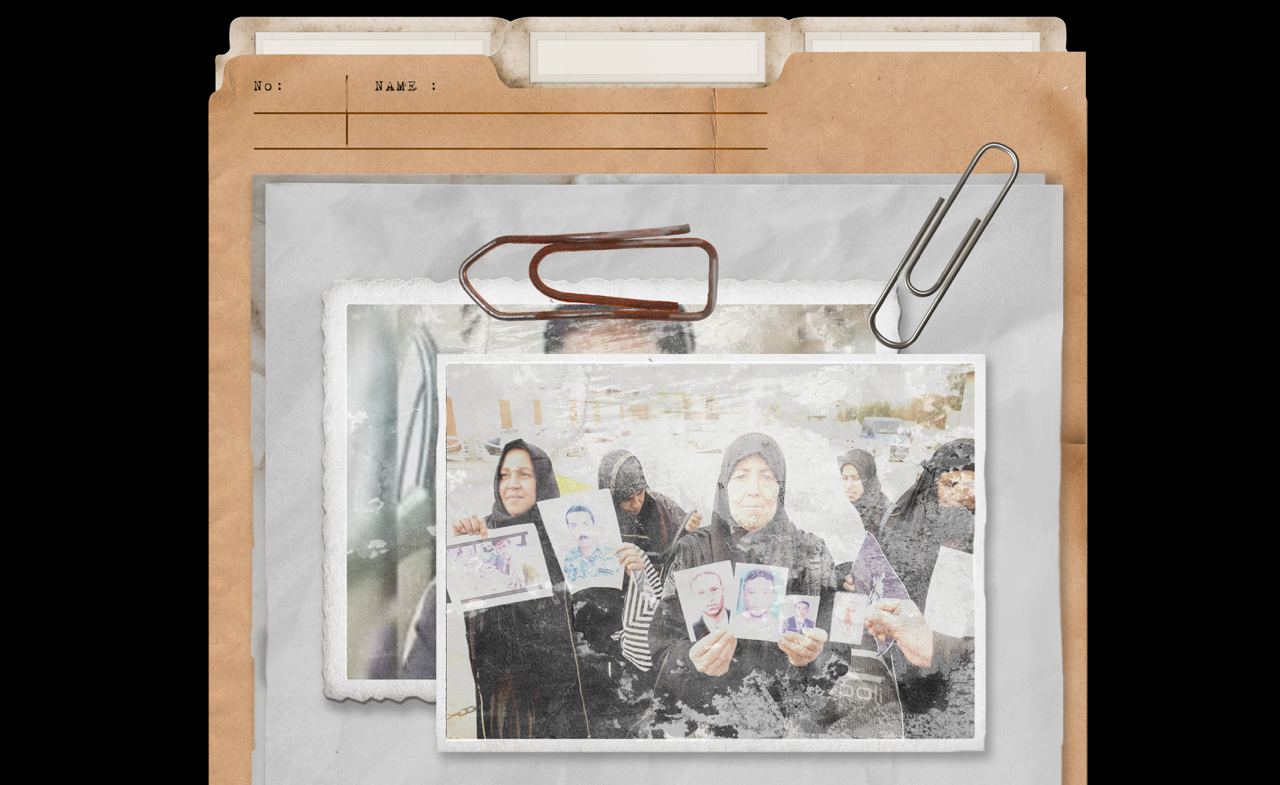
Furthermore, IOHR stated that the issue of enforced disappearances and missing persons represents an open wound in the Iraqi collective consciousness. No government claiming respect for the Constitution and the law can continue to ignore this file or treat it as a sensitive political burden. Thousands of families are still searching for answers, while State institutions maintain silence or resort to procedural formalities that do not reflect the magnitude of this humanitarian catastrophe.
IOHR asserted that the next government must possess the political courage to confront this file away from partisan calculations and the influence of armed groups. This must be done through official recognition of the scale of violations, revealing the fate of the disappeared, and ensuring the accountability of those involved. Ignoring this issue only serves to institutionalize fear and deepen the sense of injustice among citizens.
Regarding public freedoms, IOHR warned against the continued utilization of security apparatuses and "broadly-worded" laws as instruments to silence dissenting voices and prosecute journalists, activists, and opinion-makers. IOHR emphasized that democracy cannot manifest as a reality in an environment where citizens fear expressing their views, criticizing authority, or exposing corruption.
IOHR highlighted that recent years have seen a dangerous escalation in restrictions on freedom of expression, whether through legal lawsuits, defamation campaigns, or security intimidation, creating a climate of fear and self-censorship. Consequently, the new government is required to demonstrate its commitment to liberties by reviewing restrictive legislation and preventing the instrumentalization of State institutions to pressure the media and civil society.
IOHR called for a serious and responsible opening of the file on prisons and detention centers, in light of ongoing reports regarding torture, ill-treatment, and detention outside legal frameworks. It stressed that human dignity is indivisible and that any discourse on reform loses its value when places of detention become extrajudicial spaces, exempt from oversight and accountability.
The Iraqi Observatory for Human Rights concluded that the incoming government faces a daily test regarding its respect for the Constitution and fundamental rights, rather than merely an opportunity for "image branding." Iraqis are weary of deferred promises and slogans raised during every governmental transition only to vanish at the first confrontation with influential forces.
The Iraqi Observatory for Human Rights (IOHR) will monitor and track the performance of the next government with professionalism and independence. It will evaluate the administration based on its actual commitment to protecting human rights, public freedoms, and the rule of law. Building a stable and just State does not begin with political deals, but with the respect for the Iraqi individual and their right to justice, security, and dignity.